
John Tait Robertson
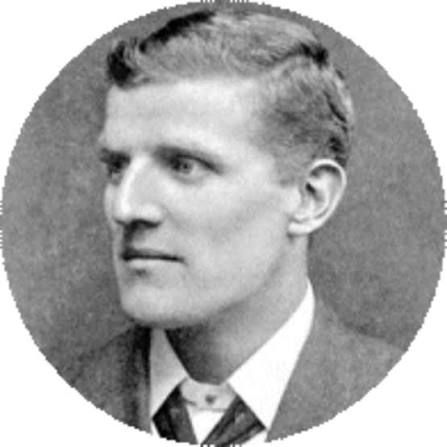
A summary of John (Jackie) Robertson's career might be that he was a great talent but one wasted by the drink. Born on Dumbarton High St. in 1877 he would pass away in 1935, back in Glasgow to be buried in Rutherglen Cemetery in 1935. But in the meantime, or at pre-Great War he had packed in a deal that quietly resonated the best part of a decade after his passing and still does today. He played, a wing-half, initially for Morton, Everton and made his mark too on the Southern League at Southampton. He then over six seasons made over a hundred league appearances for Rangers, not far off two hundred in all, including three League Championships before in 1905 on the club's foundation more or less organising the team as Chelsea's first captain.
But he had one major weakness. He was a hard-drinker, which caused him to lose his job at Chelsea and probably cut his playing-career a little short. On field he was done at thirty-two but turning to training did well enough to be invited to Hungary, to Budapest to the MTK club not just to put its players through their paces but coach what he knew, the Scottish style of play.
And, whilst there, he was to win the Cup and his team was runner-up twice in the League; not just, on the one hand, simple successes but the first steps, even seen locally as such, towards a distinctive Central European style of play with Jimmy Hogan, after Robertson stepped back in 1913, "sent home" for his drinking, picking up the baton at the same club in 1914 and carrying and developing it through the years of The Great War.
As Kalman Konrad, one of Robertson's players in Hungary, the winner of twelve caps, who went on on-field to Austria and the USA and off-field to manage in five countries, dying in Sweden, perhaps best puts it:
"We at the old MTK learned from our unforgettable master, Jackie Robertson, how to play football in a completely different way. Today the whole continent is beginning to learn the principles of the old Hungarian-Scottish school."
But on the other they should be seen as a first taste, the initial shaping of what would become the Magic Magyars of the 1950s. For and from them Hogan deservedly gets and got the bulk of the praise, but Robertson is also due some small measure. "